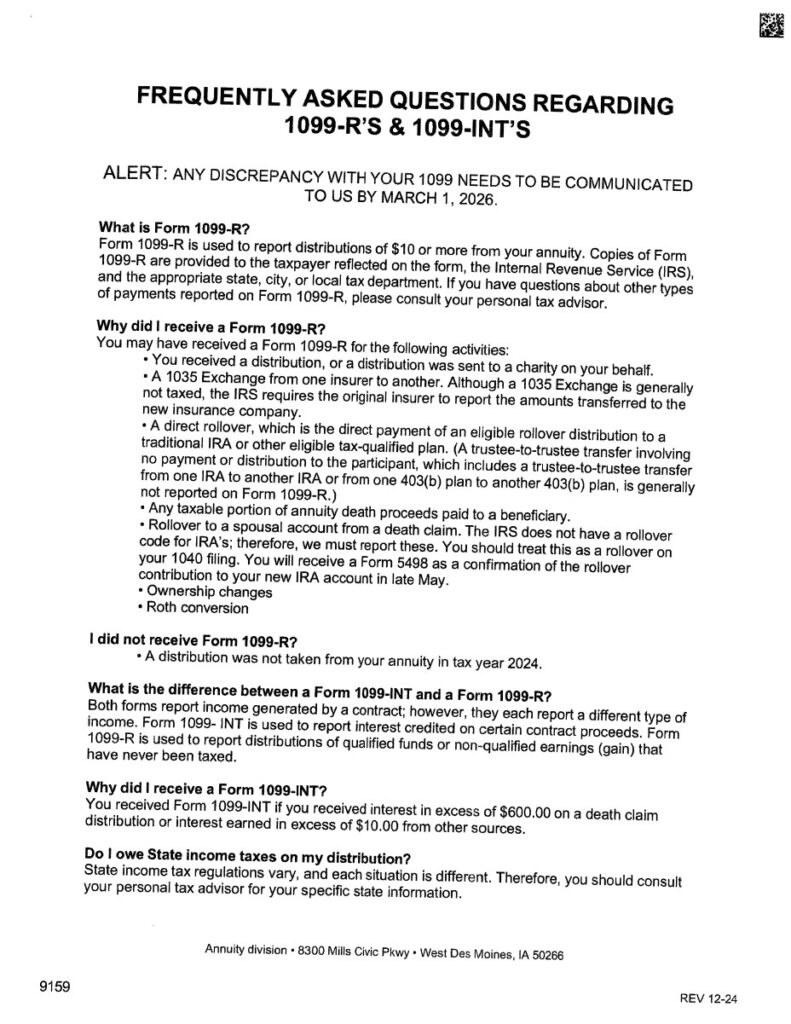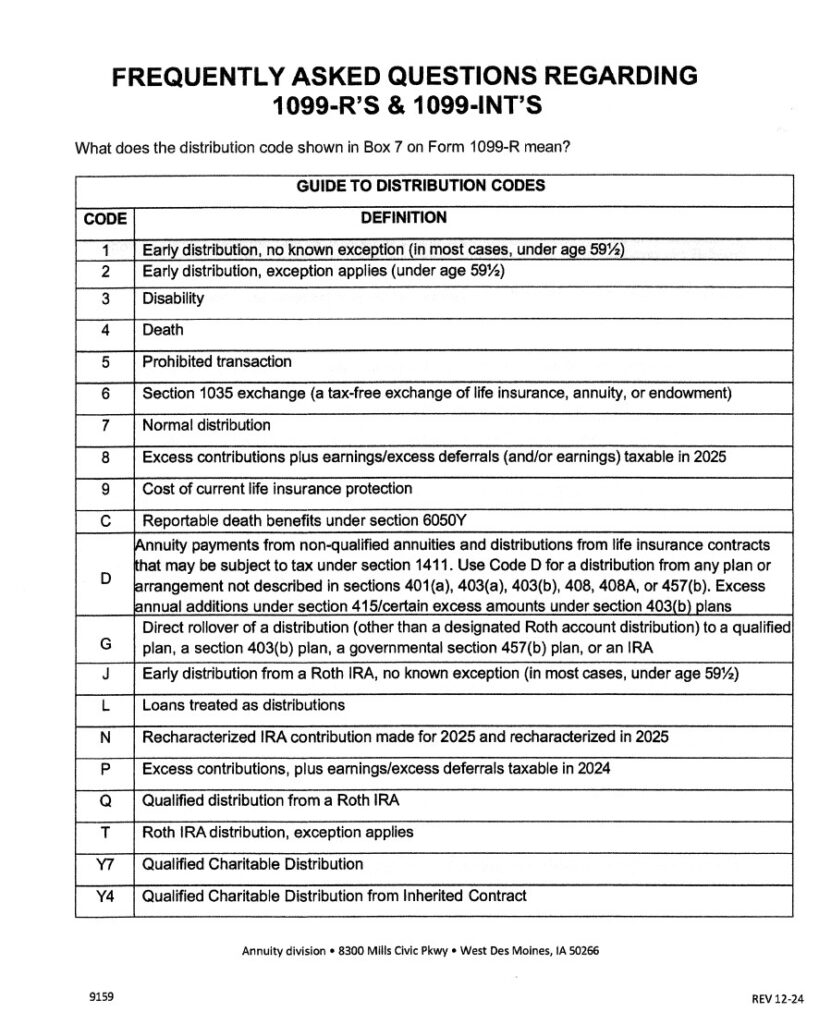
FREQUENTLY ASKED QUESTIONS REGARDING 1099-R’S & 1099-INT’S
ALERT: Any discrepancy with your 1099 must be communicated to us by March 1, 2026.
What is Form 1099-R?
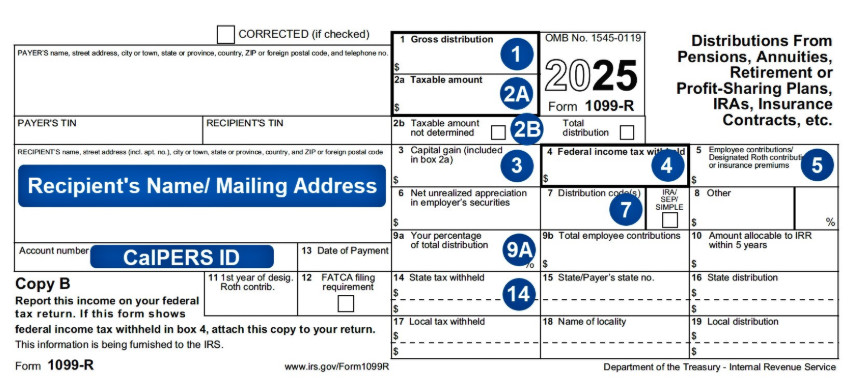
Form 1099-R is used to report distributions of $10 or more from your annuity. Copies of Form 1099-R are provided to the taxpayer listed on the form, the Internal Revenue Service (IRS), and the appropriate state, city, or local tax authority. If you have questions about other types of payments reported on Form 1099-R, please consult your personal tax advisor.
Why did I receive a Form 1099-R?
You may have received a Form 1099-R for the following reasons:
- You received a distribution, or a distribution was made to a charity on your behalf
- A Section 1035 exchange occurred between insurance companies
(Generally not taxable; however, the IRS requires the original insurer to report the transferred amounts) - A direct rollover to a traditional IRA or another qualified plan
(Trustee-to-trustee transfers are generally not reported on Form 1099-R) - Taxable annuity death benefits paid to a beneficiary
- Rollover to a spousal account from a death claim
(The IRS does not provide a rollover code for IRAs; therefore, it must be reported and treated as a rollover on your Form 1040. You will receive Form 5498 in late May as confirmation) - Ownership changes
- Roth conversion
Why did I NOT receive a Form 1099-R?
- No distribution was taken from your annuity during the 2024 tax year
What is the difference between Form 1099-INT and Form 1099-R?
Both forms report income generated by a contract, but they report different types of income:
- Form 1099-INT: Reports interest income
- Form 1099-R: Reports distributions of qualified funds or non-qualified earnings (gains) that have not yet been taxed
Why did I receive a Form 1099-INT?
You received Form 1099-INT if:
- Interest exceeded $600 on a death claim distribution, or
- Interest exceeded $10 from other sources
Do I owe state income tax on my distribution?
State income tax laws vary, and each situation is different. Therefore, you should consult your personal tax advisor for guidance specific to your state.